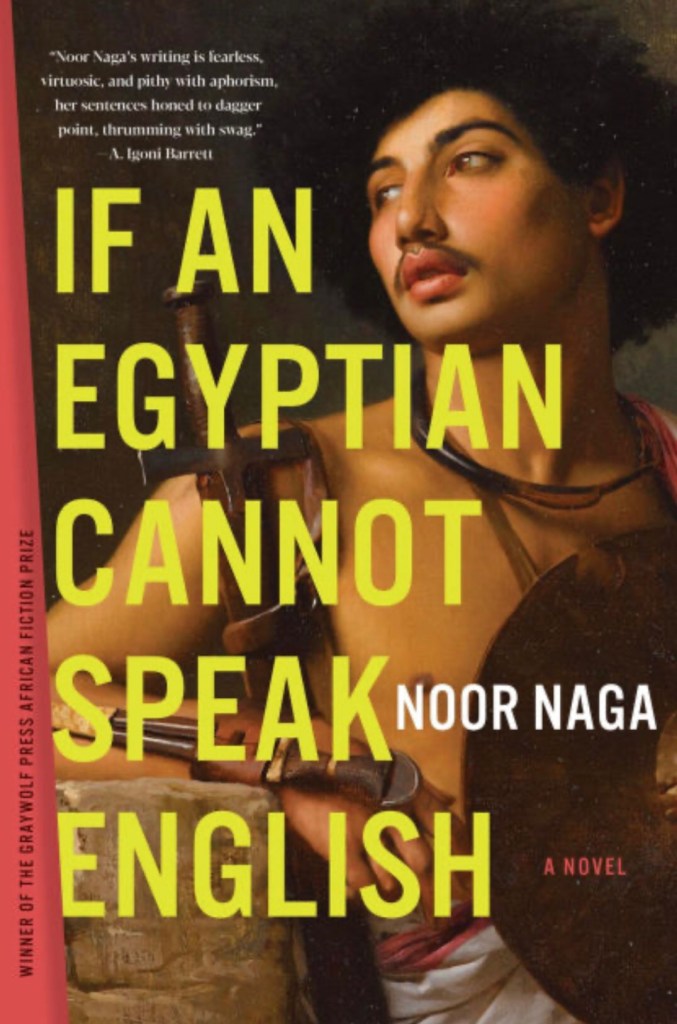
This book follows an unnamed rich American woman who decides to reconnect to her Egyptian roots by relocating to Cairo. There she meets a native Arab man referred to only as the boy from Shobrakheit. Messaging her persistently after meeting at Cafe Riche, the American girl finally gives the poor boy a chance. Falling into a dark, toxic, symbiotic relationship of abuse.
Its form is notably experimental, written in three parts. For future readers the novel switches back and forth between both their points of views, in the beginning. The last act being a deliciously meta plot twist. Noor Naga addresses classism, violence, love, social justice, sexism and race. While most books just tell the story, this one makes you question everything, as each chapter begins with one to start, including yourself. It made me think, I took days to process this book. A must read, bold piece of literature.
Spoiler Alert:
Typically I just do a synopsis of the story and why one should read it. However this novel really took my mind places. For those who’ve already had the pleasure of reading this here are some of my thoughts. The rich American dates the poverty stricken boy almost as an act of rebellion against the Cafe Riche gang and her family. After he explains restaurant or cafe to her as classism. A self-described social justice warrior, endeavoring to prove she’s different from them. At the same time she objectifies and dehumanizes him, to a pet and an experience. Like most faux woke people with privilege do. It’s performative. She locks him in her apartment all day, reducing him to a dog and sometimes that dog bites. She uses him for comfort like a pet. She used him for his knowledge until she didn’t need him anymore. Then she found he could be replaced. She’s everything she fights against. Consistently mentioning her social media following, where she calls out injustice. She’s her mother, but doesn’t see it. For me the abuse went both ways. She mentally and emotionally abused him. Knowing he had nothing to fall back on while doing so.
He on the other hand verbally and physically abused her. Going as far as rape and throwing furniture at her. Someone pointed out that while the American girl was unaware of her behavior, the boy from Shobrakheit was. His toxicity was intentional, but also a part of his culture. This blew my mind in a good way. Is innate racism less problematic, because the person is unaware or does that make it more nefarious? There’s no introspection or self-reflection of one’s behavior, showing a lack of empathy. Together these two made the whole of all the worst traits people can have, complementary toxicity. Definitely a karmic relationship.
Never identifying either of them by name, makes it easier to slip into the inner workings of their mind. The reader gets to almost be them at points, instead of seeing them as separate entities. Much like Jun Ahn’s faceless self portraits (read ‘Self-Portraits’ By Jun Ahn). Allowing you to delve deeper into the characters and yourself simultaneously. As your understanding of each person is defined by your own upbringing and biases. At times seeing things you might not like about yourself based on your reaction to either. Thoughts that you didn’t know were there. As the years accumulate I think this book will gain more acclaim. Brava Noor. Via: Barnes & Noble